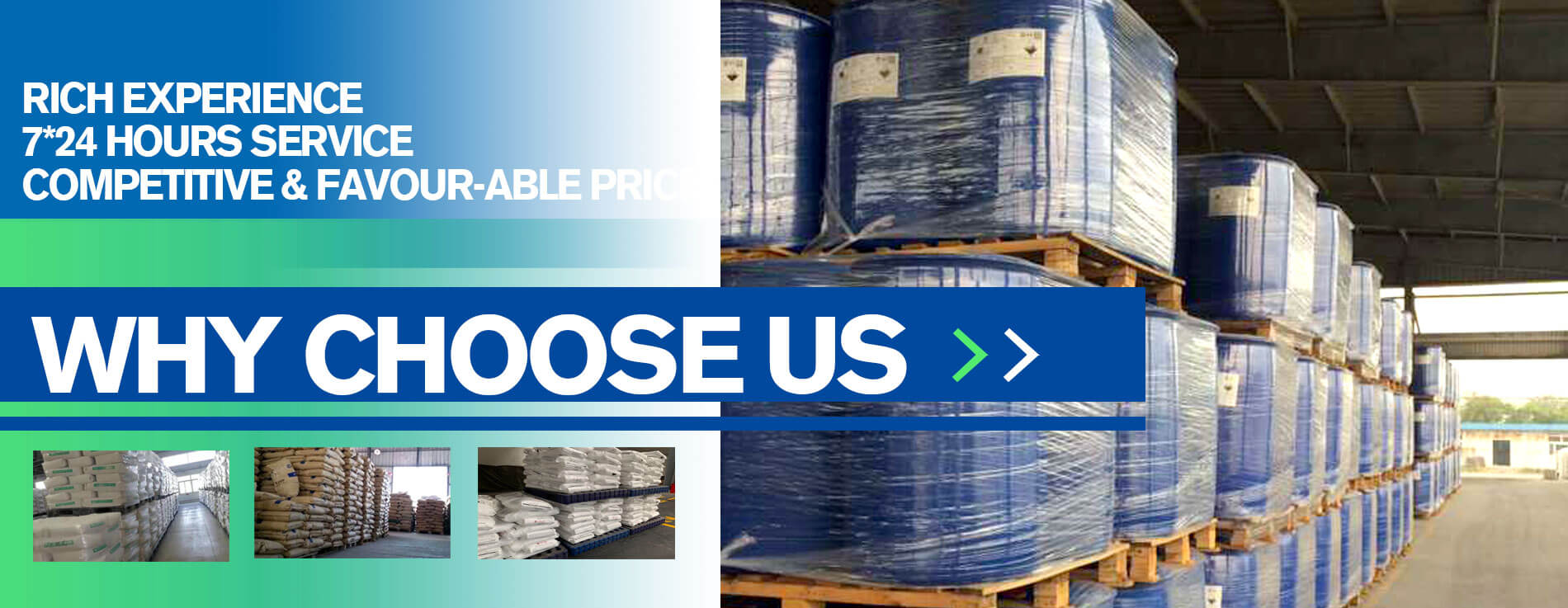
As a leading 2-(Trifluoromethoxy)Benzene Sulfonyl Chloride supplier, we deliver high-quality products across diverse grades to meet evolving needs, empowering global customers with safe, efficient, and compliant chemical solutions.
What are the main uses of 2- (trifluoromethoxy) benzenesulfonyl chloride?
The hydrolysis and condensation of triethoxy silane can produce polysiloxane. Such silane coupling agents have important uses in many fields. The following are their main applications:
First, in the field of composite materials, its role is crucial. Due to the significant difference in properties between inorganic materials and organic materials, the interfacial bonding force between the two is weak. The (triethoxy) silane coupling agent molecule has a special structure, one end can chemically react with hydroxyl groups and other groups on the surface of inorganic materials to form a stable chemical bond; the other end can physically or chemically react with organic polymer materials. In this way, a bridge is built between inorganic materials and organic polymer materials, which greatly enhances the interfacial bonding force between the two. For example, in glass fiber reinforced plastics, (triethoxy) silane coupling agent treated glass fiber can greatly improve the mechanical properties of the composite material, such as tensile strength and bending strength, and effectively improve the comprehensive properties of the material.
Second, in the coating industry, (triethoxy) silane coupling agent also plays an important role. It can improve the adhesion of the coating to the substrate. When the coupling agent is added to the coating, it will form a chemical bond between the coating and the surface of the substrate, so that the coating can adhere more firmly to the substrate. For example, in metal anti-corrosion coatings, the use of (triethoxy) silane coupling agent can significantly enhance the adhesion of the coating on the metal surface, thereby improving the anti-corrosion performance and durability of the coating. At the same time, it can also improve the weather resistance of coatings and improve the ability of coatings to resist environmental factors such as ultraviolet rays and moisture.
Third, in the field of adhesives, (triethoxy) silane coupling agents can enhance the bonding strength of adhesives to different materials. Whether it is bonding metals, ceramics, or plastics, the coupling agent can improve the interaction between the adhesive and the adhesive by reacting with the surface of the material to be adhered, so that the bonding effect is better. For example, in the bonding of some electronic components, the use of adhesives containing (triethoxy) silane coupling agents can ensure that in complex environments, the components still maintain good bonding performance and ensure the stable operation of electronic equipment.
What are the physical properties of 2- (trifluoromethoxy) benzenesulfonyl chloride?
(Trihydroxyethyl) sucrose stearate is a special compound with unique physical properties and important uses in many fields.
Looking at its morphology, (trihydroxyethyl) sucrose stearate is mostly white to light yellow powder or granular under normal conditions, with fine texture, which is conducive to its dispersion and application.
When it comes to solubility, it is insoluble in water, but soluble in some organic solvents, such as ethanol, acetone, etc. Such solubility characteristics enable it to play different roles in different solvent systems and achieve good dispersion and fusion in oil-soluble systems.
Melting point is also one of its important physical properties. ( Trihydroxyethyl) sucrose stearate has a relatively high melting point, which ensures that it has good stability at room temperature, and is not easy to change its morphology due to temperature fluctuations, providing convenience for the storage and transportation of related products.
In addition, it has excellent surface activity. In solution, it can significantly reduce the surface tension, making the liquid easier to spread and wet, and plays a key role in emulsification, dispersion, etc. Like in the emulsion preparation process involved in cosmetics, food and other industries, it can allow the oil phase and water phase to mix evenly to form a stable emulsion structure.
(trihydroxyethyl) sucrose stearate's physical properties determine its indispensable role in industrial production, daily chemical products, food processing, and many other fields.
What are the chemical properties of 2- (trifluoromethoxy) benzenesulfonyl chloride?
(Sanxiang acetyloxy) benzarsonic acid mercury salt is a unique chemical substance with unique properties and many chemical properties.
This substance is stable at room temperature and pressure. Its appearance is often white or off-white powder, with a fine texture, like a natural dust. Looking at its solubility, it is slightly soluble in water, but it has better solubility in organic solvents such as ethanol and ether. This property is like its hidden interaction with different solvents, showing a unique affinity.
At the level of chemical activity, (Sanxiang acetyloxy) benzarsonic acid mercury salt is very active. In its molecular structure, the benzene arsenic acid group interacts with mercury ions, giving the substance special reactivity. When exposed to strong acids, mercury ions are easy to detach, causing structural changes and generating new chemical substances; when alkali is strong, the benzene arsenic acid part may undergo hydrolysis, which in turn changes its chemical properties.
In terms of redox, (Sanxiang acetyloxy) benzene arsenic acid mercury salt can either be used as an oxidizing agent or a reducing agent, depending on the reaction environment. In a specific chemical reaction system, mercury ions can gain electrons and exhibit oxidation; while some atoms in the benzene arsenic acid part can lose electrons and exhibit reduction.
Coordination ability is also an important property. Mercury ions have empty orbits and can form coordination bonds with molecules or ions containing lone pairs of electrons, such as ammonia, pyridine, etc., to form complex complexes. This coordination process, such as a delicate chemical dance, combines molecules according to specific rules to form new chemical entities.
It is important to keep in mind that (Sanxiang acetoxy) benzarsate mercury salt contains mercury and is toxic. When handling and using this substance, strict safety procedures should be followed to prevent harm to human health and the environment.
What is the synthesis method of 2- (trifluoromethoxy) benzenesulfonyl chloride?
To make di- (triethoxy) silicopropyl ammonium chloride, the method is as follows:
First take an appropriate amount of allyl chloride, place it in a clean reactor, and control the temperature in an ice-water bath to stabilize the temperature at 0-5 ° C. Slowly add triethoxysilane dropwise, and constantly stir to ensure that the two are mixed evenly. The molar ratio of allyl chloride to triethoxysilane should be 1.2:1. After adding dropwise, raise the temperature to 60-70 ° C, and continue to react at this temperature for 4-6 hours. During this period, regular sampling and testing, until the conversion rate of allyl chloride reaches more than 95%, the reaction is moderate.
Subsequently, the resulting product was purified by vacuum distillation to remove unreacted raw materials and by-products, and a fraction of 120-130 ° C/1.33kPa was collected to obtain pure γ-chloropropyl triethoxysilane.
Then take the prepared γ-chloropropyl triethoxysilane, put it into another reactor, and add an appropriate amount of trimethylamine ethanol solution. The molar ratio of γ-chloropropyl triethoxysilane to trimethylamine is 1:1.1. Stir the reaction at room temperature for 8-10 hours. After the reaction is completed, the reaction solution is concentrated to remove the ethanol solvent, and then washed several times with anhydrous ether to remove impurities. Finally, the white solid 2- (triethoxy) silylpropylammonium chloride can be obtained by vacuum drying.
The whole preparation process requires attention to the precise control of the reaction conditions, the proper allocation of raw material proportions, and the fine operation of the purification steps to obtain high-purity products.
What are the precautions for the storage and transportation of 2- (trifluoromethoxy) benzenesulfonyl chloride?
In the case of sodium (trichloroacetoxy) silicate solution, during storage and transportation, there are a number of things to pay attention to and should not be ignored.
First word storage. Its properties may be easy to interact with other things, so it needs to be stored in a cool, dry and well ventilated place. Avoid direct sunlight, due to light or chemical reactions, the nature is unstable. And keep away from fire and heat sources to prevent heat hazards. In addition, this liquid may be corrosive, and the storage device should be selected as the appropriate one, such as corrosion-resistant glass and plastic containers. Do not use metal containers that are easily corroded to avoid the leakage of damaged solutions. At the same time, the storage place should be clearly marked, stating the name, characteristics and precautions of the solution, so that the viewer can know and prevent misuse.
As for transportation, there are also many key points. Before transportation, it is necessary to carefully check whether the container is tightly sealed. If there is any leakage, it must not be shipped, and it must be dealt with first. During transportation, the speed of the vehicle should be stable, and avoid violent actions such as sudden brakes and sharp turns to prevent the solution from shaking in the container and causing damage to the seal. And the transportation vehicle should also have corresponding protective facilities, such as fire extinguishers to prevent leakage, and emergency treatment tools to deal with leaks quickly in case of sudden leaks. In addition, the transportation personnel need professional training, familiar with the characteristics of this solution and emergency treatment methods, so as to ensure the safety of the whole transportation process.
In short, when storing and transporting sodium (trichloroacetoxy) silicate solution, all the details are related to safety, and it is necessary to be careful to avoid any problems.